RorTech Perspective: AI Isn't the Threat. Failing to Govern It Is.
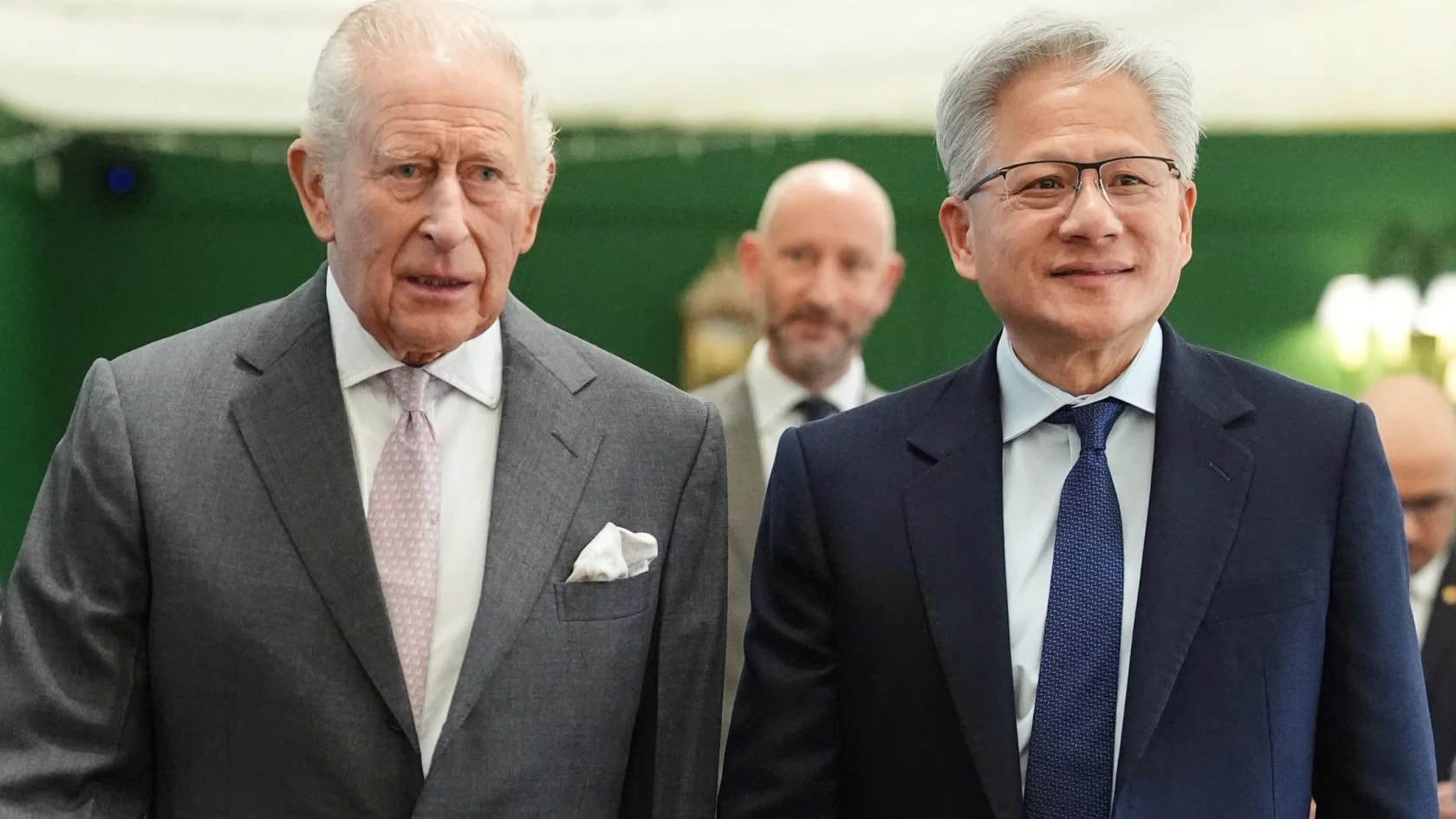
Over the past few weeks, artificial intelligence has once again dominated the headlines. We have seen discussion about a global race for AI supremacy, concerns about increasingly powerful models, warnings around misinformation, cyber threats and automation, and even King Charles III bringing together some of the world’s leading AI organisations in Scotland to discuss the opportunities and risks facing society.
The message coming from governments, technology leaders and business executives is remarkably consistent: AI is going to be one of the defining technologies of our generation.
The debate is no longer about whether AI will change how we work. It is about whether organisations are prepared for that change.
The New Global Race
Much of the recent media coverage has focused on what many commentators are calling the "Silicon Race". Just as previous generations competed for industrial dominance, manufacturing capability or access to oil, today’s competition is increasingly centred around artificial intelligence.
Countries are investing heavily in AI infrastructure, data centres, semiconductor manufacturing, specialist talent and research capabilities. Technology firms are racing to develop more capable systems while governments are exploring how best to regulate them.
This is not simply about who builds the smartest chatbot. It is about economic productivity, competitiveness, security and long-term prosperity.
Whether we like it or not, AI is becoming a strategic capability. For businesses, this means standing still is becoming an increasingly risky option.
Why the King's Message Matters
The recent AI summit hosted by King Charles III struck a balanced tone that deserves attention.
On one hand, the King recognised the enormous opportunity that AI presents. On the other, he raised legitimate questions about control, governance and the potential consequences of misuse.
At RorTech, we believe this is exactly the right conversation to be having.
Too often, discussions around AI become polarised. Some people believe AI will solve every problem, while others believe it represents an existential threat. The reality, as is often the case, sits somewhere in the middle.
AI is neither magic nor catastrophe. It is an incredibly powerful tool, and like every powerful tool, its impact depends on how people choose to use it.
What We See Every Day
Over the last few years, we have worked with organisations across the UK that are exploring how AI can improve their operations. The patterns are remarkably consistent.
Businesses are using AI to:
- Draft and summarise content
- Analyse large volumes of data
- Improve decision-making
- Automate repetitive administration
- Create reports in minutes rather than hours
- Support customer service teams
- Enhance knowledge sharing across the business
The productivity gains can be significant. We have seen individuals save hours every week on routine tasks, teams generate insights from data that would previously have taken days to uncover, and organisations become more efficient without increasing headcount.
Importantly, we do not see AI replacing entire workforces. What we see is AI helping people work better. The organisations achieving the greatest benefits are those that view AI as an enhancement to human capability rather than a replacement for it.
The Risks Are Real
That said, it would be irresponsible to pretend there are no risks. There are.
Just because we advocate for AI adoption doesn't mean we ignore the challenges.
Some of the concerns currently being discussed are entirely valid:
- Sensitive information being entered into public AI tools
- Misinformation and hallucinated outputs
- Cybercriminals using AI to scale attacks
- Lack of transparency in decision-making
- Over-reliance on automated systems
- Insufficient governance and oversight
These issues deserve serious attention. However, the existence of risk is not a reason to avoid technology altogether. Businesses already manage risks associated with email, cloud computing, social media, mobile devices and financial systems, and AI should be treated in exactly the same way.
Govern it, control it, monitor it and train people to use it responsibly.
The Bigger Risk Most Businesses Are Ignoring
In our view, the bigger risk is not adopting AI at all. Many organisations remain focused on the dangers while overlooking a fundamental reality: their employees are already using AI.
Research continues to show that many knowledge workers are bringing their own AI tools into the workplace regardless of official company policy. When leadership avoids the conversation, AI adoption rarely stops; it simply becomes uncontrolled. That is where problems emerge.
The answer is not banning AI. The answer is providing safe, secure, governed alternatives and clear guidance.
The RorTech View
Our position is straightforward: responsible AI adoption should be encouraged. Businesses should embrace the opportunities AI presents while putting appropriate safeguards in place.
That means:
- Clear AI policies
- Human oversight for important decisions
- Secure platforms such as Microsoft Copilot
- Training and education for staff
- Data governance and security controls
- Regular review of outcomes and risks
The organisations that succeed over the next decade will not necessarily be the ones with the biggest technology budgets. They will be the organisations that learn how to combine human expertise with artificial intelligence effectively.
Final Thoughts
The headlines will continue. There will be more debates about regulation, more concerns about safety, more stories about increasingly powerful AI models, and undoubtedly more discussion about who is winning the global AI race.
But for most businesses, the real question is much simpler: how can we use AI safely to create value today?
That is where the conversation should start: not with fear, not with hype, but with practical adoption.
Because the future will not belong to organisations that blindly embrace AI, nor to organisations that ignore it. It will belong to organisations that learn how to use it responsibly, and that is a race every business can still choose to join.
More News & Insights
RorTech Partners and Tilio Announce New Partnership Spanning AI Adoption and AI Search Visibility
Edwinstowe, Nottinghamshire and Exeter, Devon – RorTech Partners Ltd, the Nottinghamshire-based AI, Microsoft Copilot and technology consultancy, and Tilio, the Devon-based…

RorTech Partners Announces Move to New Edwinstowe Office Following Strong Business Growth
RorTech Partners Ltd is moving into new office premises in Edwinstowe, marking a significant milestone in the company's continued growth and expansion.

Shadow AI: What Happens When Your Team Adopts AI Before You Do
By the time UK SME leaders discuss AI formally, staff are often already using ChatGPT and similar tools. That is shadow AI — and it is usually invisible until something goes wrong.
Insight is only useful when it becomes action.
Our team works directly with SME leaders to turn AI thinking into practical, measurable outcomes, specific to your business, not a textbook.