Microsoft Build 2026: AI Has Moved On, Have You?
Build 2026 marked a fundamental shift in Microsoft's AI strategy. Here's what changed, what it means for your business, and where to focus now.
Every year, Microsoft Build gives us a glimpse of where their technology is heading. This year was different.
Build 2026 wasn't about adding more Copilot features or making generative AI slightly better. It marked a much bigger shift, one that most businesses haven't yet caught up with.
AI is no longer just helping people do work. It is starting to do the work itself.
If you're responsible for technology, operations, or commercial performance, this matters more than anything Microsoft has announced in the last three to five years.
7
new MAI models unveiled at Build
Agents
are the new applications
Full stack
model, platform & experience
The Big Shift: From Copilots to Agents
For the last 18 months, every conversation has been about Copilot in Word, Excel and Teams. Helpful? Yes. Transformational? Not quite.
At Build 2026, Microsoft made it clear that Copilots are not the end state. They are the interface. The real focus is now on AI agents: systems that can plan tasks, take action, use multiple systems and complete outcomes with minimal human input.
This is not just better prompting. It is a shift from assistance to execution. For businesses, the question is no longer “How do we use Copilot?” It is now “Where should we allow AI to run parts of the business?”
Microsoft Is Building the Full AI Stack
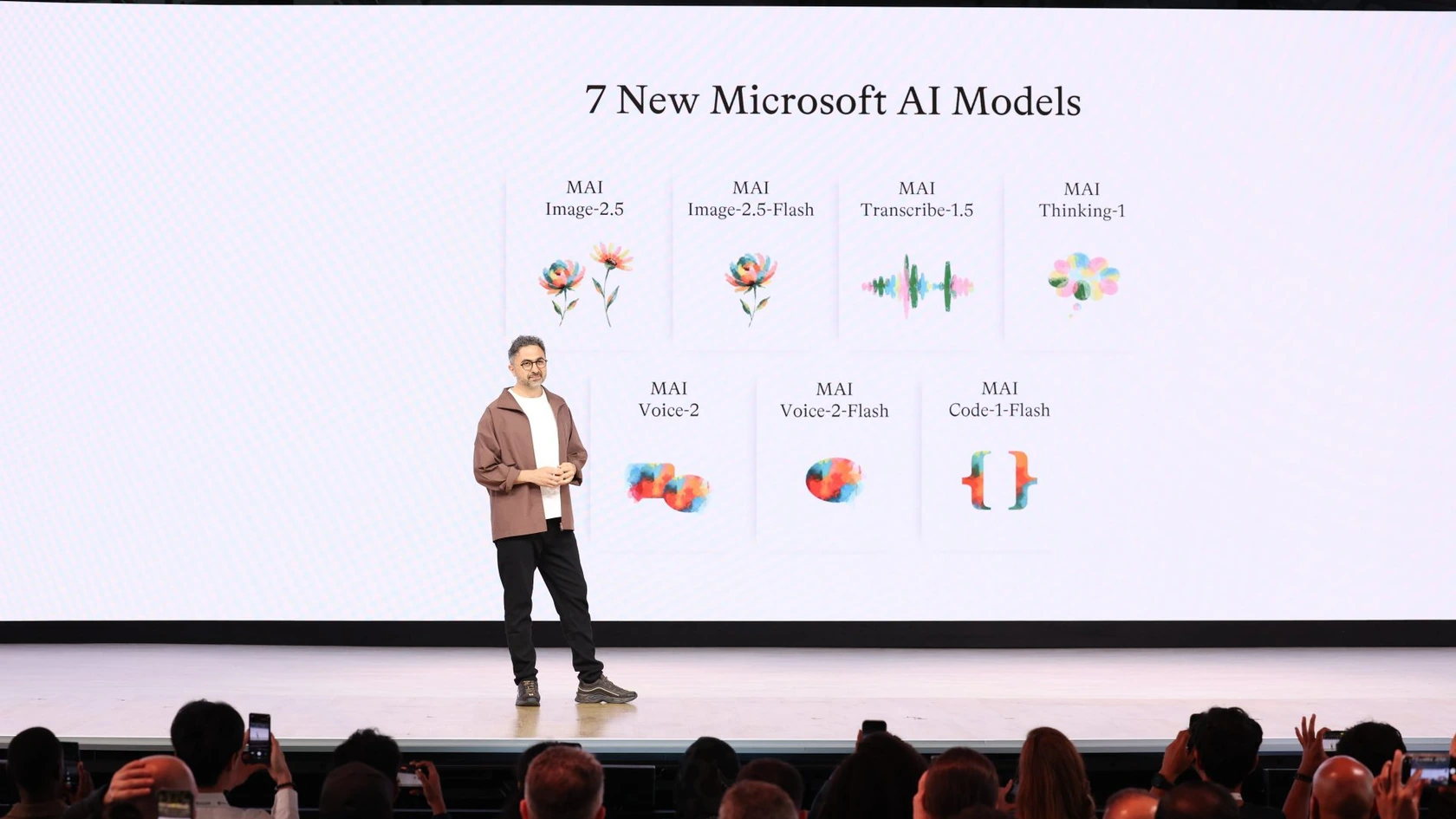
Another major shift is happening behind the scenes. Until now, Microsoft's AI story relied heavily on OpenAI. That is changing quickly.
At Build, Microsoft introduced a new family of in-house AI models covering reasoning, coding, voice and image. At the same time, they confirmed that their own coding model will replace GPT-4 inside GitHub Copilot later this year.
Microsoft is reducing dependency on external AI providers. They now control the full stack: model, platform and user experience.
For clients, this changes the conversation. The future is not about choosing one model. It is about multi-model strategies, cost versus performance decisions, and governance across multiple AI engines.
The Real Story: Agents, Not Apps
If there was one sentence that summed up Build 2026, it would be this: agents are the new applications.
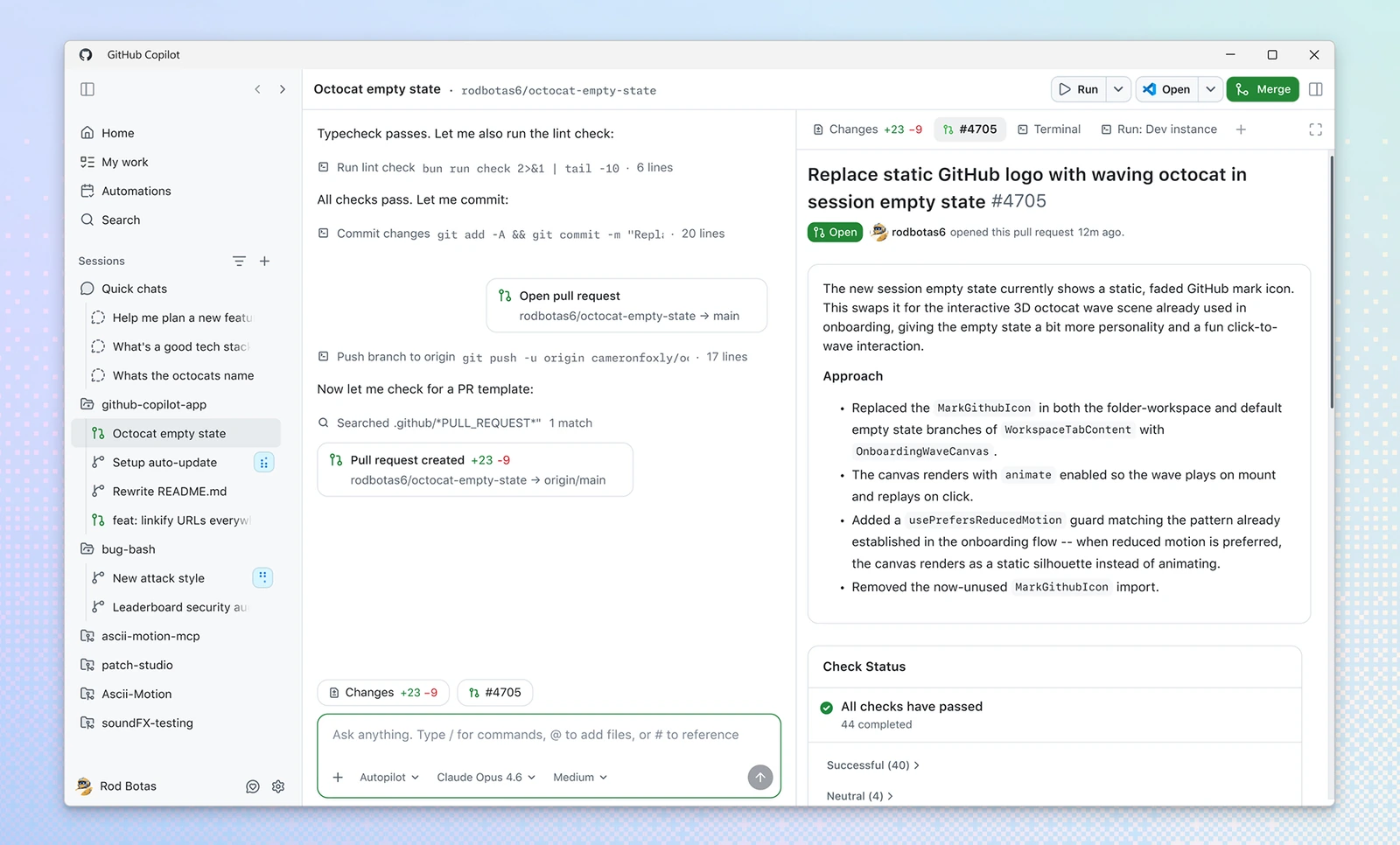
Microsoft is actively redesigning its ecosystem around this idea. Instead of opening apps, clicking through processes and moving data manually, people will increasingly assign outcomes, monitor progress and intervene when needed.
This is a fundamental change in how work gets done. The foundations are already being deployed across Microsoft 365, Azure, GitHub and Windows.
Windows Is Becoming an AI Platform
One of the less headline-grabbing but more important announcements was Microsoft's direction for Windows. Windows is no longer just an operating system for users. It is becoming a platform for running AI agents.
- Local AI models running on devices
- Agent runtimes built into the operating system
- Deeper integration with cloud-based AI services
This brings AI closer to data, users and workflows without always relying on the cloud. For organisations, it raises new questions around security, identity, device strategy and AI governance at the endpoint.
Copilot Is Evolving Again
Copilot has not been replaced. It has been repositioned. Across Microsoft 365 and GitHub, Copilot is becoming a coordinator of agents, a workspace for managing tasks and a control layer for AI-driven work.
At the same time, Copilot Studio has been significantly expanded. It now supports multi-step automation, more complex workflows and integration across business systems. In simple terms, it is moving from “build a chatbot” to “design a business process that AI can run”.
Foundry and Fabric: The Platform Layer
Microsoft continues to invest heavily in its AI and data platforms. Two areas stand out: Microsoft Foundry and Microsoft Fabric.
Microsoft Foundry is effectively the runtime for AI agents. It brings together models from multiple providers, deployment environments, and governance and security controls. For technical teams, this becomes the core platform for building and running AI solutions.
Microsoft Fabric is increasingly the data backbone for AI. Recent updates make it easier to connect business data to AI, generate insights in real time and surface outputs directly inside tools like Teams.
The key shift here is that data, analytics and AI are no longer separate disciplines. They are merging into a single operational layer.
Governance Is Catching Up
One of the most important and often overlooked trends is the shift towards governance. Microsoft is rapidly expanding capabilities around identity and access, data protection, and monitoring and control of AI agents.
The adoption blocker has shifted
Most organisations are no longer asking “Can we use AI?” They are asking “How do we control it, secure it and scale it safely?” If anything, governance is now the biggest blocker to adoption.
A Reality Check: Adoption Is Still the Challenge
Despite all of this innovation, there is still a gap. Microsoft has millions of Copilot licences in market, but active, meaningful usage remains relatively low.
That is why recent updates have focused on driving adoption, targeting users who are not engaging, and improving real-world use cases. Alongside this, high-profile outages have highlighted how tightly integrated these tools now are with core business systems.
Technology is not the limiting factor anymore. Adoption and execution are.
What This Means for Your Business
Most organisations are still in the early stages of AI adoption. Typically, we see some initial Copilot licences, a handful of use cases, limited governance and no clear strategy.
Build 2026 highlights a growing gap between what the technology can now do and how businesses are actually using it. Bridging that gap is where the real opportunity sits.
Where to Focus Now
If you take one thing from all of this, it should be this: the next phase of AI is not about tools. It is about operating models.
Identify high-value processes
Focus on real workflows that could be partially or fully automated.
Establish governance early
Identity, access, data protection and monitoring need to be in place before scaling.
Structure your data properly
AI is only as good as the data it can access and trust.
Move beyond pilots
Most businesses are stuck in experimentation. The value comes from production.
Final Thought
AI is no longer an add-on to your business. It is becoming part of how your business operates.
The organisations that succeed over the next two to three years will not be the ones with the most licences. They will be the ones that redesign how work gets done, apply AI to real business processes, and scale it with control and intent.
That is where the real competitive advantage will be built. Want to talk about what this means for your organisation? RorTech Partners help businesses move from AI experimentation to real, governed, production-ready AI adoption.
More News & Insights
RorTech Partners and Tilio Announce New Partnership Spanning AI Adoption and AI Search Visibility
Edwinstowe, Nottinghamshire and Exeter, Devon – RorTech Partners Ltd, the Nottinghamshire-based AI, Microsoft Copilot and technology consultancy, and Tilio, the Devon-based…

RorTech Partners Announces Move to New Edwinstowe Office Following Strong Business Growth
RorTech Partners Ltd is moving into new office premises in Edwinstowe, marking a significant milestone in the company's continued growth and expansion.

Shadow AI: What Happens When Your Team Adopts AI Before You Do
By the time UK SME leaders discuss AI formally, staff are often already using ChatGPT and similar tools. That is shadow AI — and it is usually invisible until something goes wrong.
Insight is only useful when it becomes action.
Our team works directly with SME leaders to turn AI thinking into practical, measurable outcomes, specific to your business, not a textbook.